
Collaboration | Community
Five Ideas for Engaging Youth Voice and Leadership in Mental Health
Abigail Holdsclaw, ncIMPACT Lead Community-Based Researcher
October 16, 2026
One of the key principles in the Community-Driven Approaches for Resilient and Empowered Youth (CARE4Youth) program is that young people’s voices and perspectives should shape how mental health supports are designed and delivered. Over the first half of our three-year program, the CARE4Youth cohort has been experimenting and strategizing to put that principle into practice.
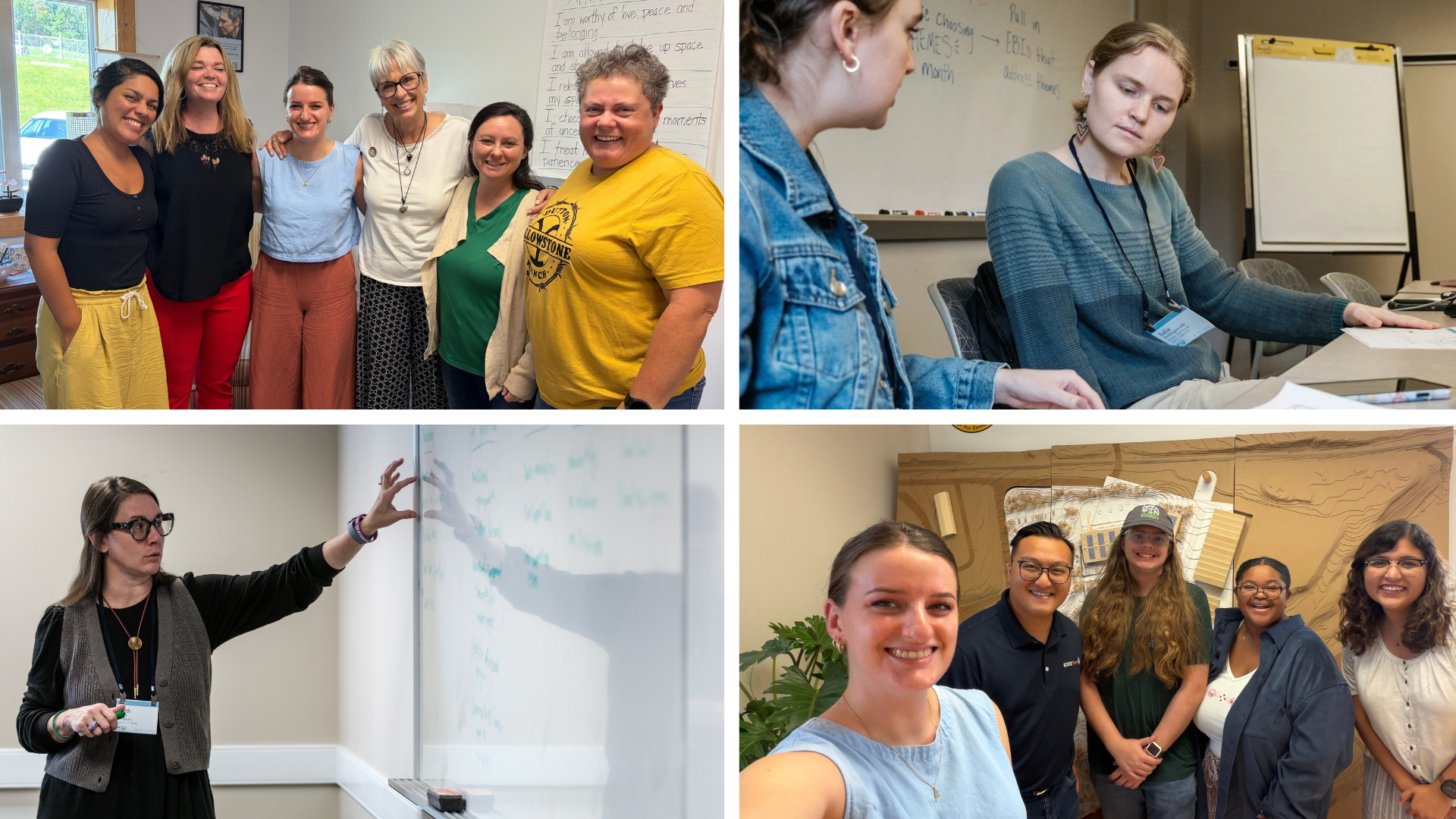
The ncIMPACT team, recently visited the CARE4Youth teams in their home communities to hear how their work has unfolded. These conversations generated important insights about youth engagement and leadership for other community-based organizations looking to support youth mental health. Here are a few lessons the teams are learning about how best to partner with youth.
1. Use existing events and spaces where young adults spend time to reach them
It can be difficult to know how to best reach young adults and capture their attention amid their other responsibilities and priorities. Rather than creating completely new methods of outreach, go to spaces where youth already spend time and receive information.
Recommendations and Examples from the CARE4Youth teams:
- Make announcements about upcoming events at the local high school football game. This allowed the team to share information about their mental health programming with lots of teenagers in a low-effort way.
- Participating in annual community events and festivals. Events that are well-established and regularly attended by many community members allow the teams to reach young adults, their parents, and other community members without having to plan, organize, and promote their own event.
2. Provide low-stakes ways for youth to engage initially
If learning about your organization for the first time, engagement that requires high effort from youth can be less successful. However, low-stakes ways to first engage and learn more about your work are not only more inciting to a larger number of young adults, but they also require less time and effort of your organization.
Recommendations and Examples from the CARE4Youth teams:
- Have a simple statement about what you do alongside a QR code that leads to your website for people to learn more and get connected. These can be used when participating in events or placed in high-traffic locations where young adults can learn more and engage, even when your organization isn't present.
- Offer merchandise with your organization logo at events. This provides a clear reason and objective for a young adult to approach you, rather than it being an open-ended interaction.
3. Encourage youth leadership of programming and activities
Youth leadership can help ensure that the programming is relevant to their peers and allows youth. Learn more about youth leadership here.
It also provides valuable experience for young adults to leverage as they work towards their academic and professional goals. By making the value of this experience clear to young adults, they are encouraged to partner with organizations to design youth programming.
Recommendations and Examples from the CARE4Youth teams:
- Provide internships that allow young adults the opportunity to work with their organization, learning transferable skills such as time management, communication, and organization.
- Create a peer support group led by a young adult with an interest in mental health counseling.
- Incorporate youth perspective into major events. Multiple teams have invited youth to serve on planning committees for youth mental health conferences, offering small stipends to youth for their participation.
4. Provide different ways for youth to provide their input
Not all young adults will be interested or able to engage with your organization in formalized, consistent ways. By providing multiple avenues for young adults to share their perspectives the input, experiences, and concerns of a representative group of young adults in your community inform your activities, not only those who are able to participate in higher-effort ways.
Recommendations and Examples from the CARE4Youth teams:
- Collecting the input of other young adults during community events that attract a diversity of people. One CARE4Youth team participated in a downtown festival, offering a coupon for free ice cream if they completed a survey about their experiences.
- Asking students to provide videos and artwork to showcase at a community event.
5. Incorporate a wellbeing focus into programming not explicitly about mental health
Even if your organization does not work in the mental health space, you can play an important role in creating spaces for young adults to talk about their emotions and mental health. In fact, it may be more comfortable to use programs and activities not explicitly abut mental health as an avenue for conversation.
Recommendations and Examples from the CARE4Youth teams:
- An internship program focused on trade skills asked the young adults to reflect on how they felt about themselves and their futures throughout the program. This opened up conversations about mental health and belonging.
Community-Driven Approaches for Resilient and Empowered Youth (CARE4Youth) is a three-year commitment to implement community-based strategies to improve youth and young adult mental health launched by Carolina Across 100 and the Foundation of Hope Child and Adolescent Anxiety and Mood Disorders Program (CHAAMP) in the UNC Department of Psychiatry.
Carolina Across 100 is a five-year initiative, coordinated by the ncIMPACT Initiative, seeking to support community-driven recovery and build sustainable efforts in all 100 counties by providing human resources, data insights, coaching, facilitation, coordination efforts, and program design. CARE4Youth is the sixth program in this larger initiative.